About the Physical Sciences, Engineering and Mathematics Sector
The Physical Sciences, Engineering, and Mathematics Sector includes disciplines like physics, chemistry, materials science, engineering, computer science, and mathematics. These fields are essential for innovation and problem-solving across industries such as aerospace, energy, telecoms, and manufacturing.
Wales offers real-world impact in these areas through its leadership in compound semiconductors, cyber security, FinTech, high value manufacturing and renewable energy. Cardiff-based IQE holds a 55% global market share in compound semiconductors, powering technologies from smartphones to satellites, supported by a strong innovation ecosystem including Vishay’s £250 million commitment to the UK’s largest semiconductor facility in Newport, underpin Wales’ reputation as a magnet for global business and talent. Alongside major players such as KLA, IQE, Microchip, a collaborative community of SMEs and global names such as GE, Siemens, and General Dynamics, reflect the deep integration with UK, European, and US supply chains.. In cyber security, Wales is home to global players like Airbus, Thales, and General Dynamics, alongside agile start-ups, supported by university-industry partnerships and close proximity to GCHQ and MoD cyber operations.
The Welsh FinTech sector is booming, with companies like Starling Bank, Sonovate, and Delio creating thousands of jobs. The Foundry accelerator continues to attract global start-ups such as Yacooba and FinalRentals. Meanwhile, over 5,000 firms and 150,000 people power Wales's high-value manufacturing industry, exporting everything from aircraft wings to energy systems worldwide. Wales also leads in energy and environment, employing over 58,000 in sectors like marine energy, low-carbon projects, and environmental tech—supported by deep-sea ports and strong export links.
Together, these strengths highlight how Wales is applying physical sciences and engineering to tackle global challenges and deliver next-generation technologies.

Physical Sciences, Engineering and Mathematics University strengths in Wales
Wales combines world-class university research with strong industry collaboration, driving innovation across physics, materials science, engineering, computer science and mathematics. These disciplines underpin advances in aerospace, energy, telecommunications and manufacturing, helping Wales tackle global challenges through next-generation technologies. The sector’s success is built on close partnerships between academia, business and government, ensuring agility in decision-making and the right environment for research and enterprise to flourish.
At the heart of this ecosystem is CSconnected, the world’s first compound semiconductor cluster, funded through the UKRI Strength in Places Fund. Anchored in South Wales, the cluster unites Cardiff University, the Compound Semiconductor Centre, and leading companies such as IQE plc, which holds around 55% of the global market share for compound semiconductors that power technologies from smartphones to satellites. This collaboration positions Wales as a global leader in semiconductor research and manufacturing, with a reputation for translating advanced materials science into commercial opportunity.
Further west, Swansea University leads pioneering work through its Institute for Innovative Materials, Processing and Numerical Technologies (IMPACT) and the Zienkiewicz Institute for Modelling, Data & AI. These internationally recognised research centres bring together materials science, computational modelling and artificial intelligence to develop solutions for advanced manufacturing, sustainable engineering and digital design. Their work underpins key industrial sectors and supports innovation from concept to commercialisation.
The University of South Wales (USW) and Welsh Government complements this strength through expertise in cybersecurity and systems engineering hosted in the National Cyber Security Centre (NCSC). Recognised as an Academic Centre of Excellence in Cyber Security Education, USW plays a vital role in developing the skilled workforce and secure systems that underpin modern industry. USW's Computing, Cyber security, Mathematics and Informatics Research and Innovation Group undertakes cutting-edge expertise in AI, data science, and computational modelling to drive innovation across sectors including digital healthcare and business technology. Whilst the University's Engineering Research and Innovation Group focuses on advanced and sustainable engineering materials, electrical and electronic engineering, as well as mechanical and aerospace engineering and the Sustainable Environment Research Centre (SERC) focuses on the circular economy, hydrogen energy and sustainable energy systems, as well as waste and wastewater treatment and environmental analysis.
In materials integrity and industrial validation, the University of Wales Trinity Saint David (UWTSD) partners with the TWI Technology Centre (Wales) in teaching, research and development in the field of Non-Destructive Testing (NDT) through the NDT Centre. This collaboration advances the development of innovative inspection and quality-assurance technologies, supporting safety and performance across manufacturing and engineering sectors.
Whilst the Department of Physics at Aberystwyth University combines instrumentation development (novel optical systems, robotics) with science applications through various research centres and groups such as the Solar System Physics and the Materials Research groups. And Bangor University excels in nuclear science, marine physics and electronic engineering through its School of Computer Science and Electronic Engineering, the School of Ocean Sciences, and the cross-disciplinary Nuclear Futures Institute. Wrexham University hosts the OpTIC Technology Centre part of its Enterprise and Innovation portfolio, which includes specialist facilities in optics, photonics, and precision engineering.
Wales’s broader innovation landscape reflects internationally visible strengths in semiconductors, modelling and AI, and advanced materials, alongside growing capability in cybersecurity, FinTech, advanced manufacturing and sustainable energy. The FinTech sector is thriving, with companies such as Starling Bank, Sonovate and Delio creating thousands of high-value jobs, while initiatives like The Foundry accelerator attract global start-ups including Yacooba and FinalRentals. More than 5,000 firms and 150,000 people drive Wales’s high-value manufacturing sector, exporting aircraft wings, electronics and energy systems worldwide. Meanwhile, over 58,000 people are employed in energy and environmental technologies, ranging from marine energy and low-carbon infrastructure to environmental engineering, supported by deep-sea ports and strong export links.
Together, these strengths demonstrate how Wales is applying physical sciences, engineering and mathematics to deliver real-world impact. Through close collaboration between universities, industry and government, Wales continues to foster innovation, attract global investment and shape the technologies that power the future.
Wales Conference Ambassadors in the Physical Sciences, Engineering and Mathematics Sector

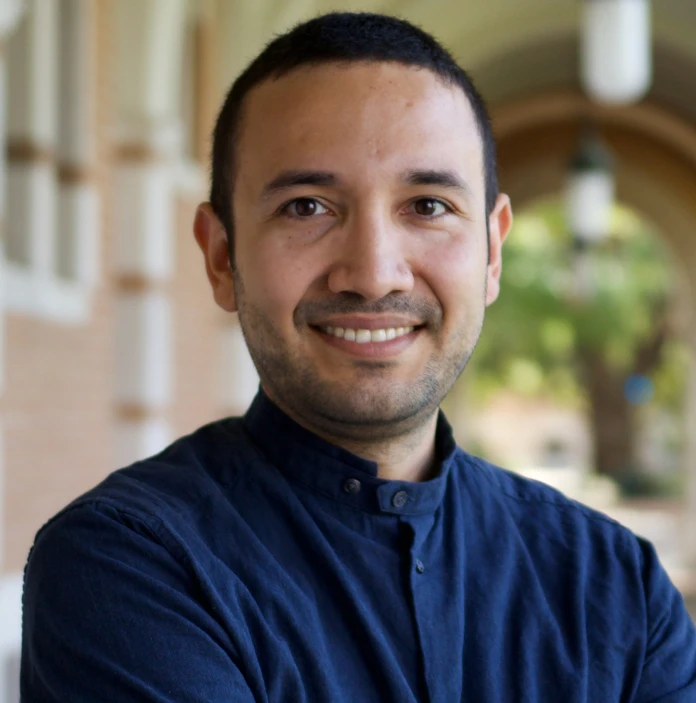



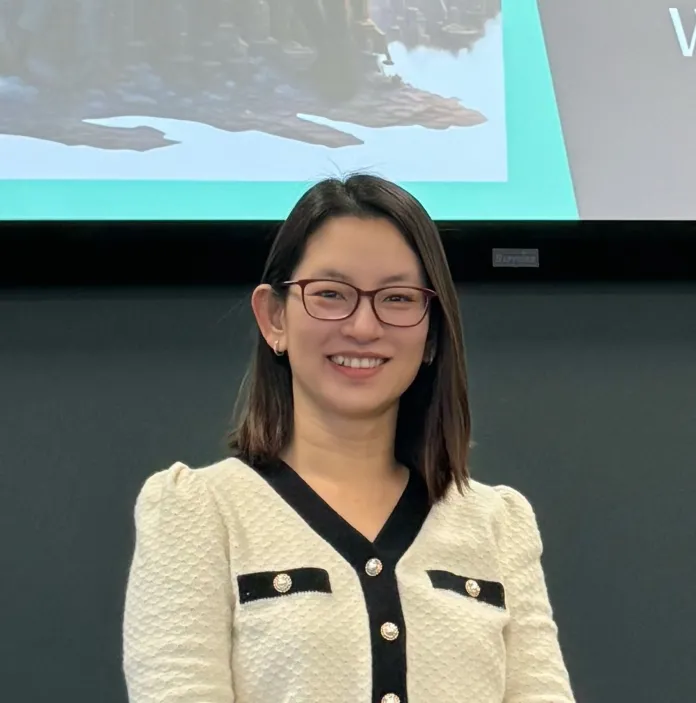


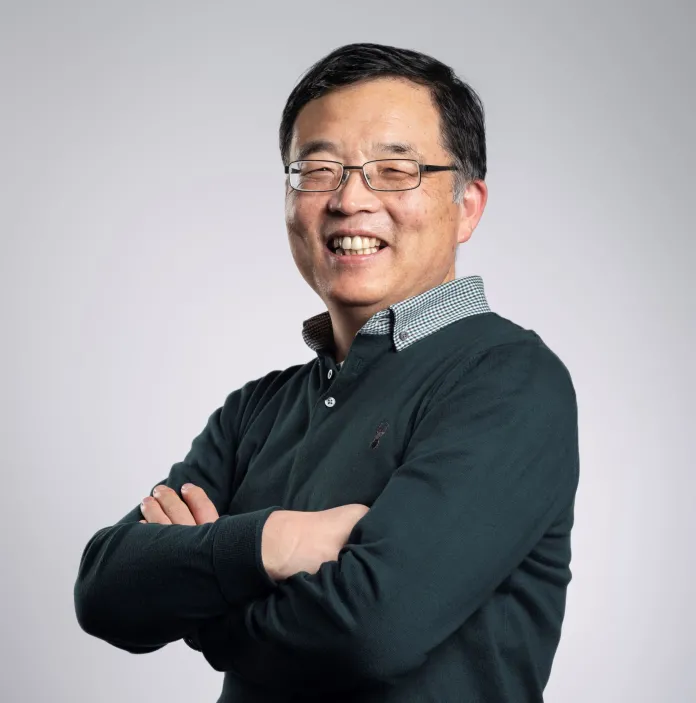
- Dr Otar Akanyeti, Biometrics, Computer Science, Aberystwyth University
- Dr Adil Mughal, Mathematics, Aberystwyth University
- Dr Christine Zarges, Computer Science, Aberystwyth University
- Dr Karina Marsden, Renewables, Bangor University
- Professor Simon Middleburgh, Nuclear Materials, Bangor University
- Professor Jianming Tang, Optical Communications, Bangor University
- Dr Victor Romero Cano, Robotics and Autonomous Systems, Cardiff University
- Dr Tim Davis, Astrophysics, Cardiff University
- Professor Stephen Eales, Astrophysics, Cardiff University
- Professor Jon Gillard, Statistics & Data Science, Cardiff University
- Dr Pan He, Environmental Science and Sustainability, Cardiff University
- Dr Ze Ji, Computer Science, Cardiff University
- Professor Wolfgang Maier, Environmental Sciences, Cardiff University
- Dr Alberto Roldan Martinez, Computer Science, Cardiff University
- Professor Agustin Valera-Medina, Renewables, Cardiff University
- Dr Juan Hernandez Vega, Cyber Security, Cardiff University
- Dr Pablo Orozco Ter Wengel, Bioscience / Genomics, Cardiff University
- Dr Wei Zhou, Lecturer in Intelligent Visual Computing, Cardiff University
- Dr Muneeb Imtiaz Ahmad, Computer Science, Swansea University
- Dr Daniele Cafolla, Robotics, Swansea University
- Dr. Jose Norambuena-Contreras, Civil Engineering, Swansea University
- Professor Matt Carnie, Material Science & Engineering, Swansea University
- Professor Antonio J. Gill, Civil Engineering, Swansea University
- Dr Ashraf A. Fahmy, Robotics and Automation, Swansea University
- Professor Andrew King, Animal Behaviour, Swansea University
- Dr Gibin Powathil, Mathematics, Swansea University
- Dr Simon Robinson,Computer Science, Swansea University
- Dr Megan Venn-Wycherley, Computer Science, Swansea University
- Dr Sivagunalan Sivanathan, Electrical Engineering, University of South Wales
- Mr AllanTrow, Astrotourism, Dark Sky Wales
- Dr David Sprake, Renewables, Wrexham University
- Dr Phoebe Teh, Computer Science, Wrexham University
- Dr Mobayode Akinsolu, Electronic Engineering, Wrexham University
Nataliia Luhyna, Mechanical Engineering, Wrexham University
Get in touch
If you are a trade or specialist association or professional society. If you work for a not-for-profit or charitable concern. If you lead a commercial business or specific industry group. Or if you work in an academic setting alongside international colleagues, we would love to hear from you.
You can email, telephone us or complete our online enquiry form on our ambassador Wales homepage.
Email: ambassadors@meetinwales.co.uk
Telephone: +44 02921 661018